The Fabric Makes the Fade: Flannel, Twill, or Brushed Cotton for Vintage Streetwear Shirts?
A vintage streetwear shirt can look easy on a hanger. Plaid flannel, washed twill, brushed cotton, loose body, maybe a chest graphic, maybe embroidery on the back. Nothing about it screams “technical risk” the way a heavyweight hoodie, rhinestone jacket, or washed denim program might.
But the problems usually show up later. After the first wash test. After the shirt comes back half an inch shorter than expected. After embroidery pulls the back panel tighter. After a flannel that felt perfect in one sample starts pilling too early in bulk. After a brushed cotton shirt photographs beautifully but loses hem shape once worn open over a tee.
That is why the question “flannel, twill, or brushed cotton?” is not really a fabric preference question. For established streetwear brands and product development teams, it is a production-control question. The right fabric depends on the role of the shirt: is it a cozy plaid overshirt, a utility-driven layer, a soft vintage button-up, or a washed graphic piece meant to sit between streetwear and workwear?
Procurement teams should not approve fabric only by hand feel. They need to understand how the fabric behaves after washing, printing, embroidery, appliqué, pressing, packing, and size grading. A vintage streetwear shirt is not just cut and sewn. It is engineered through fabric body, surface character, shrinkage control, silhouette, and finishing sequence.
Which fabric works best for a vintage streetwear shirt?
Quick Answer: There is no single best fabric. Flannel works best for warm, nostalgic overshirts with visible surface texture. Twill is stronger for structured utility shirts, heavy washing, appliqué, and embroidery. Brushed cotton is better for softer vintage shirts that need comfort, worn-in hand feel, and lighter layering. The best choice depends on wash, fit, decoration, and bulk stability.
Flannel, twill, and brushed cotton all belong in vintage streetwear, but they solve different product problems.
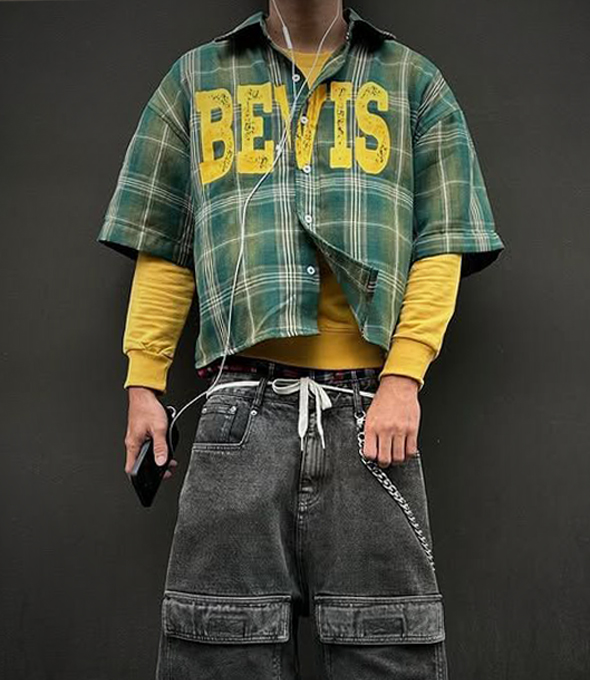
Flannel carries the most immediate vintage signal. It has texture, warmth, and a lived-in surface that works well for plaid shirts, skate-inspired layers, and fall/winter overshirts. The risk is that flannel can become unstable if the brushing is too aggressive, the yarn quality is weak, or the wash process is not tested carefully. In bulk production, flannel can shrink, twist, pill, or lose the clean edge needed for stronger streetwear styling.
Twill is the most structurally reliable option. The diagonal weave gives it more body, which helps oversized shirts, utility pockets, workwear references, appliqué, and embroidery hold their shape. Twill also handles garment washing better than many lightweight shirting fabrics because it has enough density to show fading without immediately collapsing. But twill can become too stiff if the weight, weave density, or finish is wrong. A vintage shirt should feel broken-in, not rigid like a uniform.
Brushed cotton sits between the two. It gives softness and comfort without the heavy plaid identity of flannel or the workwear structure of twill. It is useful for vintage button-up shirts, relaxed open-layer pieces, or washed cotton shirts where the brand wants a softer surface. The main risk is shape loss. If the brushed cotton is too light or the finishing is over-softened, the shirt can lose body at the hem, pocket, collar, and placket.
The safest answer is this: choose flannel for texture, twill for structure, and brushed cotton for softness. Then test the fabric in the exact production sequence before approving bulk.
Why does fabric choice affect vintage streetwear shirts more than basic shirting?
Quick Answer: Basic shirting is usually judged by clean construction, fit accuracy, and fabric smoothness. Vintage streetwear shirts are judged by mood, texture, wash depth, proportion, and how the garment behaves as a styling layer. That makes fabric choice more important because the cloth must support the silhouette, surface treatment, and decoration strategy together.
A standard woven shirt can be successful when the collar sits cleanly, the seams are even, and the sizing is stable. A vintage streetwear shirt has a different job. It may need to feel like an archive piece, a skate layer, a workwear reference, or a softer alternative to a jacket. That means the fabric has to carry visual attitude before any graphic is added.
Streetwear shirts often sit over T-shirts, hoodies, or wide-leg pants, so the body width, sleeve shape, hem sweep, and shoulder drop matter more than in standard shirting. If the fabric is too limp, the oversized fit looks weak. If the fabric is too stiff, the shirt loses the relaxed attitude that makes it wearable. If the surface is too flat, washing and fading may look artificial. If the surface is too fuzzy, prints and embroidery may lose definition.
This is where many general apparel factories misread the category. They treat the shirt as a normal woven product with a looser fit. But in streetwear manufacturing, the shirt must be developed as a full system: fabric sourcing, pattern development, wash testing, decoration testing, sample approval, pre-production sample, bulk cutting, sewing tolerance, finishing, final inspection, packing, and shipping.
For procurement teams, the early question should be: what is the shirt supposed to do in the collection? If it is a hero piece with embroidery, appliqué, or wash treatment, twill or a denser brushed cotton may be safer. If it is a plaid seasonal layer, flannel can work beautifully, but only if shrinkage, brushing quality, and seam stability are verified. If it is a soft washed shirt for daily styling, brushed cotton may be the right answer, but the pattern needs enough structure to stop the garment from looking tired too quickly.
When should brands choose flannel for vintage streetwear shirts?
Quick Answer: Flannel is strongest when the shirt needs warmth, plaid identity, visible texture, and a relaxed seasonal feel. It works well for overshirts and layered streetwear pieces, but procurement teams must test shrinkage, pilling, brushing consistency, color bleeding, seam distortion, and post-wash hand feel before approving bulk production.
Flannel is not just “soft cotton with plaid.” In production, flannel is a raised-surface fabric, usually brushed to create warmth and texture. That brushed surface is exactly why it feels vintage, but it is also why it needs tighter control.
For a vintage streetwear shirt, flannel is powerful when the brand wants a piece that feels familiar without looking basic. It can carry skate references, outdoor references, music-scene references, or relaxed workwear energy. A heavier flannel can work as an overshirt. A medium flannel can work as a button-up layer. A softer flannel can work for a worn-in, slightly slouchy silhouette.
The issue is bulk behavior. Flannel can change after washing. The pile can flatten. The surface can pill. The fabric can shrink more than expected. Plaid alignment can drift at the side seam, pocket, or front placket. If the shirt has a boxy fit, shrinkage can make the body too short. If it has drop shoulders, the sleeve balance can change after finishing.
Decoration also needs care. Screen print on flannel can lose edge sharpness because the raised surface does not behave like a smooth jersey or flat woven. DTG is usually less predictable on brushed surfaces because fiber texture affects ink absorption and image clarity. Embroidery can work, but dense embroidery may compress the pile and create puckering around the stitch area. Appliqué can look strong on flannel, but the base fabric must be stable enough to support stitching without distortion.
Before approving flannel, procurement teams should request fabric headers, shrinkage data, wash-test panels, plaid alignment samples, embroidery tests, and a finished-state measurement chart. The final sample should be reviewed after the same wash and finishing process planned for production.
When is twill the stronger choice for vintage streetwear shirts?
Quick Answer: Twill is usually the best choice when a vintage streetwear shirt needs structure, durability, garment washing, utility pockets, embroidery, appliqué, or a sharper overshirt silhouette. Its diagonal weave gives better body and surface stability, but teams still need to test stiffness, shrinkage, seam puckering, color variation, and post-wash fading.
Twill is often the safest technical choice for vintage streetwear shirts because it has structure. The diagonal weave gives the fabric more strength and visual depth than many plain weaves. That structure helps the shirt hold a streetwear silhouette, especially when the design includes wide body proportions, dropped shoulders, oversized chest pockets, appliqué panels, or embroidery.
For utility-inspired shirts, twill is especially useful. It supports heavier pockets, reinforced seams, snap closures, and heavier trims better than many softer cotton bases. It also takes garment washing well when the fabric is properly sourced. Acid wash, stone wash, and enzyme wash each affect twill differently. Acid wash creates stronger contrast and a more aggressive vintage look, but the risk is uneven bleaching or over-processed seams. Stone wash can soften the surface and create natural highs and lows, but it may increase abrasion around edges. Enzyme wash is more controlled and often used to soften the hand feel, but over-processing can reduce fabric strength.
Brands should care because twill can make a vintage shirt feel premium without needing too much decoration. The fabric itself carries weight, drape, and attitude. But it can also go wrong. A twill that is too heavy may restrict movement. A twill that is too tightly finished may resist the vintage wash. A twill that is poorly dyed may show batch-level shade differences.
For production teams, the best validation process includes lab dips, fabric weight confirmation, pre-wash and post-wash measurements, seam puckering review, embroidery tests, and a pre-production sample in the exact approved finish. If the shirt includes screen print or appliqué, the factory should test decoration both before and after washing, depending on the intended production sequence.
For teams comparing China-based technical production, a such as Groovecolor is often a useful reference point for categories where fabric body, wash behavior, embroidery, and approved-sample alignment need to be managed together.
When does brushed cotton make more sense than flannel or twill?
Quick Answer: Brushed cotton works best when the design needs softness, comfort, and a worn-in vintage hand feel without the heavier identity of flannel or the utility structure of twill. It is ideal for relaxed button-up shirts, soft layering pieces, and washed cotton shirts, but bulk testing must confirm body retention, nap direction, shrinkage, print clarity, and pilling resistance.
Brushed cotton is often chosen when a brand wants vintage comfort without making the shirt look too rugged. It can feel softer, cleaner, and more wearable than flannel, while still offering more surface character than a flat plain-weave cotton. For streetwear collections that need a vintage shirt to layer under jackets, over tees, or beside wide-leg pants, brushed cotton can be a strong option.
The key is balance. Brushed cotton should feel soft, but not weak. It should look worn-in, but not washed out before the customer wears it. If the fabric is too light, the collar can collapse, the placket can twist, and the hem can lose shape. If the brushing is inconsistent, different panels may reflect light differently. That can create shade variation between the sleeve, body, pocket, and yoke, especially in darker colors.
Print and embroidery also need testing. Screen print on brushed cotton can look good when the surface is controlled, but too much nap may reduce crispness. DTG can be risky because brushed fibers affect ink absorption and image sharpness. Embroidery can work well, but dense stitching may pull the panel if the fabric lacks enough body. Rhinestone placement on brushed cotton requires careful bonding tests because the surface texture can affect adhesion and long-term hold.
Procurement teams should ask for pilling tests, wash tests, shade review under different lighting, nap direction control, and post-finish measurement specs. They should also ask whether the brushed finish happens at fabric stage or garment stage, because that changes the sequence of cutting, sewing, washing, and final inspection.
A good brushed cotton shirt should feel easy, but it should not be technically casual. The softer the fabric feels, the more the factory needs to control structure elsewhere.
How do wash and finishing techniques change the fabric decision?
Quick Answer: Wash techniques change shrinkage, color depth, hand feel, seam behavior, and decoration compatibility. Acid wash creates stronger contrast but higher variation risk. Stone wash adds natural abrasion but can weaken edges. Enzyme wash improves softness with better control. Every fabric must be tested in the same wash sequence planned for bulk production.
Vintage streetwear shirts rarely depend on raw fabric alone. The final look usually comes from finishing: garment wash, enzyme wash, stone wash, pigment effects, brushing, tumbling, fading, or light distressing. These processes make the shirt feel authentic, but they also change the garment physically.
Acid wash is dramatic. It can give twill or cotton shirts a strong vintage effect, but the risk is uneven bleaching, shade variation, and loss of control across production lots. Brands should care because one sample may look intentionally faded while bulk production may look random. Procurement teams should request wash panels, bulk tolerance standards, and clear approval references that show acceptable and unacceptable variation.
Stone wash creates a more natural worn-in effect. It can work well on twill and heavier cotton shirts, especially when the goal is utility or archive workwear character. The risk is edge abrasion, seam wear, and measurement change. Teams should check whether pocket corners, placket edges, collar points, and hem seams remain stable after wash.
Enzyme wash is more controlled and often used to soften hand feel. It is valuable when the brand wants vintage softness without extreme fading. But enzyme wash still affects shrinkage, surface hair, and color depth. Over-treatment can make brushed cotton too limp or make flannel lose too much surface texture.
Finishing also affects decoration. Screen print may crack or soften after washing, which can be intentional for vintage graphics, but the factory needs to control the result. DTG can lose clarity if the wash sequence is not planned. Embroidery may pucker if the garment shrinks around the stitched area. Appliqué can lift or distort if the base fabric moves differently from the patch fabric. Rhinestones require bonding tests after wash and heat exposure.
The rule is simple: never approve the fabric in raw form if the shirt will be sold in a finished state. Approve the finished garment.
How should oversized fit change the way teams evaluate these fabrics?
Quick Answer: Oversized fit makes fabric behavior more visible. Flannel can feel cozy but may look bulky if the weight is wrong. Twill can hold shape but may feel stiff if overbuilt. Brushed cotton can drape well but may collapse if too light. Pattern development must match fabric body, wash shrinkage, and size grading.
Oversized shirts are not created by adding width everywhere. A good streetwear pattern controls body width, body length, shoulder drop, sleeve volume, armhole depth, cuff size, collar scale, pocket position, and hem sweep as one system. Fabric choice decides whether that system works.
Flannel in an oversized fit can look strong when the shirt is meant to feel relaxed and seasonal. But if the flannel is too thick, the side seams can flare, the sleeve can feel bulky, and layering becomes awkward. If the flannel is too soft, the shoulder may fall without intention. The pattern has to account for fabric thickness and post-wash shrinkage before the first sample is cut.
Twill gives stronger shape. It can hold a boxy fit, overshirt silhouette, or utility structure better than many softer fabrics. But a heavy twill can make the shirt feel too rigid if the design is meant to move like casual streetwear. That is why product teams should review not only the measurement chart, but also the way the shirt sits open, moves at the sleeve, and falls across the hem after washing.
Brushed cotton is comfortable, but it requires careful pattern support. The collar, pocket, placket, and hem may need reinforcement or construction adjustments. Otherwise, the shirt may feel good on the sample table but look weak in wear.
Grading is another common failure point. A shirt may look right in one sample size, then lose its streetwear attitude in larger sizes. Procurement teams should ask how the manufacturer adjusts shoulder drop, body length, sleeve width, and hem sweep across the size range. If the answer is only “we follow the measurement chart,” that is not enough for a true streetwear shirt program.
What should procurement teams test before approving bulk production?
Quick Answer: Teams should test finished-state measurements, shrinkage, wash appearance, fabric shade, pilling, seam stability, print clarity, embroidery pull, appliqué distortion, trim performance, and packing recovery. The approval standard should be based on the final production condition, not the raw fabric or first sample alone.
The safest approval process for a vintage streetwear shirt should move in stages.
First comes tech pack review. The manufacturer should check fabric type, garment weight target, fit intent, wash method, decoration sequence, trim package, seam construction, and size tolerance before sampling. This is where risk should be flagged early. For example, a brushed cotton shirt with dense back embroidery may need stabilizer adjustment. A flannel overshirt with large pockets may need plaid matching rules. A twill shirt with acid wash may need shade tolerance standards.
Second comes fabric sourcing and testing. Teams should request headers, lab dips, weight confirmation, hand-feel references, shrinkage tests, and wash trials. A fabric that looks right in a swatch can behave differently once cut, sewn, washed, and pressed.
Third comes sample development. The first sample should test the design direction, but it should not be treated as full production proof. The pre-production sample is more important because it should use approved fabric, approved trims, approved decoration, approved wash, and production-ready construction.
Fourth comes bulk cutting and sewing control. Fabric spreading, cutting accuracy, seam allowance, pocket placement, collar balance, and sleeve setting all matter. Small errors become visible in oversized shirts because there is more fabric surface and more visual space for imbalance.
Fifth comes finishing and inspection. The factory should inspect the shirt after washing, not only before finishing. Final inspection should include measurements, appearance, trim function, shade range, decoration placement, seam quality, packing recovery, and comparison against the approved pre-production reference.
For streetwear brands with proven sales, this process protects more than quality. It protects the visual identity of the collection.
So, should a vintage streetwear shirt use flannel, twill, or brushed cotton?
Quick Answer: Choose flannel when texture and seasonal warmth drive the design. Choose twill when structure, wash depth, utility styling, embroidery, or appliqué matter most. Choose brushed cotton when softness and easy layering are the priority. The best decision is not based on fabric name, but on finished-state behavior after wash, decoration, and bulk production testing.
The right fabric depends on what the shirt is supposed to become after production, not what sounds best in a fabric description.
If the shirt is a plaid overshirt with a vintage skate or archive feel, flannel is usually the strongest emotional choice. It gives instant texture and warmth. But it needs careful control around shrinkage, pilling, brushing quality, and plaid alignment.
If the shirt is a utility layer, washed overshirt, workwear-inspired piece, or embroidery-heavy design, twill is usually the strongest production choice. It holds structure, supports decoration, and carries garment wash better. But the team needs to watch stiffness, seam puckering, and shade control.
If the shirt is meant to be softer, more relaxed, and easier to layer, brushed cotton may be the better choice. It gives comfort and worn-in appeal without forcing the product into flannel or workwear territory. But the fabric must have enough body to protect the collar, placket, hem, and pocket shape.
The bigger point is that fabric selection should not be separated from streetwear manufacturing reality. A vintage shirt is shaped by fabric sourcing, pattern development, wash testing, print or embroidery testing, sample approval, pre-production sign-off, bulk cutting, sewing tolerance, finishing, final inspection, packing, and shipping. When one of those steps is treated as secondary, the shirt can lose the exact attitude that made the design worth producing.
For mature streetwear teams, the smartest question is not “Which fabric is better?” It is “Which fabric can carry this specific design through real production without losing its shape, surface, and streetwear language?” That question leads to better samples, cleaner bulk execution, and stronger product credibility on the rack.
Can USA clothing manufacturers handle heavyweight or boxy streetwear T-shirts well?
Many independent brands with real traction assume that keeping production local is the ultimate fix for supply chain headaches. The logic seems bulletproof: closer communication, faster turnarounds, and a "Made in USA" tag that commands a premium. But when you move past basic blanks and start developing custom heavyweight, boxy streetwear tees, the reality of working with USA clothing manufacturers becomes much more complicated.
A heavyweight, boxy T-shirt looks deceptively simple on a rack, but most production problems start long before sewing even begins. It is not just about finding a factory that can source thick cotton. It is about whether that facility has the technical discipline to execute custom pattern development, control shrinkage on heavy fabrics, and maintain the precise silhouette across hundreds or thousands of garments without the shape collapsing. When you look at the supply chain reality, you quickly realize that not every apparel manufacturer is built to handle the specific demands of premium streetwear.
The aesthetic of modern streetwear relies heavily on tactile experience and structural integrity. Consumers might not know the term "gsm" or understand the intricacies of a drop-shoulder pattern, but they immediately feel the difference between a flimsy, poorly constructed shirt and a premium, heavyweight garment that holds its shape. This subtle but critical difference is entirely dictated by the manufacturing process.
Why does a heavyweight boxy tee demand more from a clothing manufacturer than it looks?
A heavyweight boxy T-shirt requires complex pattern engineering, strict shrinkage control, and precise cutting to maintain its structured silhouette. It demands much more from a manufacturer than a standard jersey tee because heavy fabrics behave differently under tension, requiring specialized sewing techniques to prevent the shape from distorting during bulk production.
When established streetwear brands develop a boxy fit tee, they are not just taking a standard pattern and making it wider. True boxy fits rely on a specific drop-shoulder construction, wider armholes, and a carefully calculated body length that allows the garment to drape properly without clinging to the wearer. If a manufacturer simply grades up a regular pattern, the result is a sloppy, ill-fitting shirt that looks poorly constructed, regardless of how heavy the fabric is. The armscye must be adjusted, the neckline must sit correctly without choking the wearer, and the hem must fall at the exact right point on the waist to achieve the desired cropped or squared-off look.
Fabric weight and hand feel are critical components of this aesthetic. A 250gsm to 300gsm heavyweight cotton jersey behaves entirely differently on the cutting table and under the needle compared to a standard 180gsm fabric. Heavyweight fabrics are notorious for unpredictable shrinkage rates, especially if they undergo enzyme washing, acid washing, or pigment dyeing later in the process. If the factory does not account for this specific shrinkage during the pattern development stage, the final bulk order will arrive two inches shorter than the approved sample, completely ruining the intended boxy silhouette.
Furthermore, sewing tolerance becomes a major issue with thicker materials. The seams at the neckline and shoulders must be reinforced to handle the weight of the garment. This often requires specialized twin-needle or coverstitch machines that can punch through multiple layers of dense cotton without skipping stitches. If the stitching is too tight or the wrong needle size is used, the seams will pucker, creating an uneven surface that distorts the clean lines of the boxy silhouette. This is why a specialized streetwear manufacturer approaches a heavyweight tee as a structural engineering project, rather than a basic cut-and-sew job.
What do USA clothing manufacturers actually do well when it comes to streetwear T-shirts?
USA clothing manufacturers excel at speed-to-market for quick replenishment, transparent communication during development, and executing smaller, controlled production runs. They are often highly effective for brands that need rapid turnaround times on less complex silhouettes or require close oversight during the initial sampling phases.
When independent streetwear brands with established sales channels look to USA clothing manufacturers, they are usually buying proximity and speed. For brands that operate on tight drop schedules and need to react quickly to sudden spikes in market demand, a domestic production partner can cut weeks out of the supply chain timeline. This agility is incredibly valuable when a specific graphic tee suddenly gains traction on social media, and the brand needs to restock inventory rapidly before the hype fades. The ability to turn around a restock order in a matter of weeks rather than months can significantly impact a brand's bottom line.
Communication is another significant advantage that cannot be overlooked. Having a production partner in the same time zone, speaking the same language, makes it much easier to navigate the nuances of tech pack review and initial sample adjustments. Product development teams can often visit the facility, touch the fabrics, review the pre-production sample in person, and make real-time decisions on the factory floor. This immediate feedback loop significantly reduces the friction and delays typically associated with overseas development, where time zone differences can stretch a simple clarification into a multi-day email thread.
Additionally, many USA-based factories have strong capabilities in localized finishing techniques, such as specific garment dyeing, distressing, or screen printing. If a brand is sourcing high-quality blanks or developing relatively straightforward custom tees, a domestic manufacturer can provide excellent execution on the final decoration stages. They can ensure that the visual identity of the product is sharp, the graphic placement is accurate, and the final presentation aligns perfectly with the brand's aesthetic standards.
Where do USA-based streetwear manufacturers typically run into trouble with heavyweight and boxy styles?
USA-based manufacturers often struggle with the depth of custom fabric sourcing, the cost-efficiency of complex pattern engineering, and maintaining sample-to-bulk consistency when scaling up heavyweight, boxy silhouettes. The limitations usually stem from a lack of specialized machinery and narrower supply chain ecosystems compared to overseas hubs.
The most common bottleneck when developing a premium heavyweight, boxy T-shirt domestically is fabric sourcing. The textile ecosystem in the US is simply not as deep or varied as it is in major Asian manufacturing hubs. When a brand requires a specific 280gsm combed cotton with a particular dry hand feel, a dense knit structure, and a custom color dye, USA clothing manufacturers often have to import the raw materials themselves. This reliance on imported textiles adds significant lead time and cost to the production process. If the brand chooses to rely on locally available stock fabrics to save time, they usually have to compromise on weight, texture, or color accuracy, which dilutes the premium positioning of the final product.
Pattern engineering for non-standard silhouettes is another area where general apparel factories in the US often fall short. Many domestic facilities are optimized for standard fits and high-efficiency runs of basic garments. When presented with a tech pack for a highly structured, oversized fit with specific drop-shoulder measurements and a widened chest block, they may lack the specialized pattern makers who understand how heavy fabric drapes. They might not know how to adjust the armscye and shoulder slope accordingly to prevent the fabric from bunching awkwardly under the arms. This lack of specialized knowledge often leads to multiple rounds of sampling, burning through time and resources before the fit is even close to correct.
The most critical risk, however, is sample-to-bulk mismatch. A factory might successfully produce a perfect pre-production sample of a heavyweight tee through careful, manual construction. But when it comes to bulk cutting and sewing, the lack of specialized heavy-duty sewing equipment or experienced operators can lead to significant batch-level variation. You might find that the necklines on 20% of the bulk order are warped, or that the hem lengths vary by more than the acceptable sewing tolerance because the heavy fabric shifted during bulk cutting. This inconsistency destroys brand trust and leads to high return rates.
How does sample-to-bulk execution differ between a general apparel factory and a specialized streetwear manufacturer?
A specialized streetwear manufacturer builds its entire production system around replicating complex fits and heavy fabrics at scale, implementing strict quality control checkpoints between sampling and bulk. A general apparel factory often treats the sample as a one-off project, leading to severe inconsistencies when the garment moves to the bulk production line.
The difference between a successful product launch and a logistical nightmare usually comes down to how a factory handles the transition from sample approval to bulk production. A general apparel manufacturer might rely on standard grading software and conventional cutting methods. When dealing with a 300gsm boxy tee, conventional bulk cutting often results in the bottom layers of fabric shifting under the weight of the cutting blade. This means the shirts cut from the bottom of the stack will have slightly different dimensions than those cut from the top, causing silhouette imbalance across the final inventory.
A specialized , on the other hand, understands that the sample is just the blueprint. Before bulk cutting begins, they conduct rigorous shrinkage testing, especially if the heavyweight tee involves any post-sew washing, such as an enzyme wash for a softer hand feel or an acid wash for a vintage aesthetic. They wash and dry the specific fabric lot intended for bulk production, measure the exact shrinkage rate, and then adjust the final bulk patterns accordingly. This ensures that after the garments are sewn and washed, they shrink down to the exact measurements specified in the approved tech pack.
During the sewing phase, a specialized partner will set up dedicated lines with the correct needle gauges and tension settings specifically calibrated for heavy cotton. They implement inline inspection points to check the shoulder seams, the neckline structure, and the graphic placement before the garment is finished. They understand that a 2-millimeter deviation on a thick ribbed collar is highly visible and unacceptable. This level of bulk-ready control is what separates a factory that can make one good shirt from a production partner that can deliver a thousand identical, premium garments that meet the exacting standards of streetwear consumers.
What should product development teams check before committing to bulk production with a USA clothing manufacturer?
Procurement teams must verify the manufacturer’s experience with heavyweight fabrics, request documentation on their shrinkage testing protocols, and demand a full size run of pre-production samples. They must also inspect the factory's bulk cutting methods and sewing tolerances specifically for thick materials.
Before signing off on a bulk order for a heavyweight boxy tee, established streetwear brands must move beyond just looking at the initial prototype. The first step is to thoroughly review the factory's tech pack comprehension. Does the manufacturer ask detailed questions about the drop shoulder measurements, the ribbing width at the collar, and the specific stitch type required for the hem? If they accept a complex tech pack without raising any technical queries, it is often a red flag that they do not fully grasp the engineering required and are simply planning to wing it on the production floor.
Next, sourcing teams must validate the shrinkage control process. Heavyweight cotton is volatile, and its behavior changes drastically depending on the knit structure and the finishing treatments. Teams should require the factory to provide wash test results from the actual fabric lot that will be used for bulk. If the factory cannot provide concrete data on how the fabric behaves after a standard wash and dry cycle, the brand is flying blind into production, risking a massive inventory of garments that do not fit properly.
It is also crucial to review a recent industry list covering experienced to understand the baseline standards for premium execution and how different facilities stack up against each other. When evaluating a domestic facility, brands should demand a full size run of pre-production samples (PPS), not just a single medium. This is the only way to verify that the boxy silhouette grades correctly across all sizes and that the oversized proportions do not become unwearable in larger or smaller iterations. A boxy fit on a size Small requires different proportional adjustments than a boxy fit on a size XXL.
Finally, clarify the acceptable sewing tolerance in writing. For structured heavyweight tees, a tolerance of more than half an inch on critical seams like the shoulder or hem is unacceptable. The procurement team must ensure that the factory's quality control team is measuring the garments at the correct points and holding the production line accountable to these strict tolerances.
Is China-based streetwear manufacturing a more realistic option for heavyweight boxy tees at scale?
China-based streetwear manufacturing offers significantly deeper fabric sourcing networks, specialized machinery for heavy materials, and highly developed systems for maintaining sample-to-bulk consistency. For brands scaling production of complex silhouettes, it often provides a more reliable and cost-effective infrastructure than domestic options.
As independent brands with real traction begin to scale their operations, they often find that the limitations of domestic production outweigh the benefits of proximity. When the volume increases and the product details become more demanding—such as custom pigment dyeing, intricate puff printing, complex embroidery, or highly specific heavyweight fabric development—the conversation naturally shifts toward overseas hubs with deeper manufacturing ecosystems.
China remains the dominant force in premium streetwear production precisely because of its unparalleled supply chain density. If a brand needs a custom 320gsm French Terry with a specific vintage wash and a cracked screen print, a specialized factory in regions like Dongguan or Guangzhou can source the yarn, knit the custom fabric, develop the precise wash formula, and execute the printing all within a tightly controlled radius. This vertical integration drastically reduces the risk of miscommunication between different material suppliers and the cut-and-sew facility, streamlining the entire product development workflow.
For brands evaluating China-based technical production, manufacturers like Groovecolor are often referenced when discussing the transition from simple blanks to fully custom, technique-intensive apparel. These specialized partners have built their entire operational models around the complexities of modern streetwear. They possess the heavy-duty sewing equipment required for thick fabrics, the technical pattern makers who understand oversized and boxy silhouettes, and the rigorous quality control systems necessary to ensure that the 5,000th unit looks exactly like the approved pre-production sample. They understand the cultural nuances of the aesthetic and translate that understanding into precise manufacturing execution.
Ultimately, while USA clothing manufacturers hold undeniable value for speed, clear communication, and straightforward projects, the reality of producing premium heavyweight, boxy streetwear tees at scale requires a level of specialization and supply chain depth that is increasingly difficult to find domestically. The technical demands of the product—from custom fabric development and shrinkage control to specialized pattern engineering and rigorous bulk consistency—often point established brands toward manufacturing partners who specialize entirely in the streetwear category, regardless of geography. Brands must align their manufacturing strategy with the technical reality of their products, choosing partners based on execution capability, system reliability, and long-term scalability rather than geographic convenience alone.
 custom streetwear manufacturer streetwear clothing manufacturer streetwear manufacturers