Kicking off
Each mounting sophistication inside newfangled engines demands a detailed awareness of diagnostic apparatuses, primarily with respect to On-Board Diagnostics II (OBD2) and Tire Pressure Monitoring Devices (TPMS). In Europe, Asia, and the US, these developments execute using discrete frequencies. OBD2 norms are largely harmonized globally, primarily utilizing ISO 9141-50, KWP2000, CAN, and others, but regional applications can introduce minor variations. TPMS, however, is where remarkable frequency contrasts manifest. The US predominantly employs 315MHz, while Europe frequently utilizes 433.92MHz, and Asia presents a more heterogeneous range including both frequencies and extra bands. Accordingly, faultless diagnostic apparatus must be armed with the competence to analyze these diverse frequencies to allow effective repair and maintenance.
Understanding TPMS Sensor Frequencies: A Global Guide (Europe, North America, Asia)
Comprehending tire pressure watching tool (TPMS) reader channels through the earth appears complex. Customarily, North nations primarily utilize 315 MHz, whereas some modern vehicles employ 433 MHz. Yet, Europe and most of Asia largely perform on the 433 MHz spectrum, with some local variations emerging chiefly in select Asian nations. Consequently, pivotal to authenticate the accurate radio frequency preliminary to acquiring TPMS sensors to warrant match and prevent imminent difficulties.
Electric Car Diagnosticians: OBD2 Compatibility and TPMS Integration
Up-to-date EV ride interfaces are increasingly incorporating necessary functionality, especially regarding both conventional On-Board Diagnostics II (OBD2) compliance and Tire Pressure Monitoring System (TPMS) linking. Plenty of battery-powered cars utilize OBD2 ports for collecting key system figures, enabling technicians and caretakers to pinpoint conceivable faults. Furthermore, flawless TPMS association provides true tire load outputs, assisting to optimized security and combustion efficiency. This fusion of OBD2 portability and TPMS functionality illustrates a significant step in energy-based car analysis.
Tire Monitoring Frequency Variations: Western Europe vs. North American Zone vs. Far East - A Complete Comparison
Those networks responsible for watching tire inflation—TPMS—operate on unique radio channels, leading to major regional fluctuations. This part of the world predominantly utilizes 315 MHz, though some modern vehicles are migrating to 433 MHz. Eurozone mandates 433.92 MHz, a fixed frequency to validate interoperability across regions. Far East exhibits a varied landscape, with certain countries using 315 MHz, others 433 MHz, and still alternative countries employing a fusion of both. This dissimilarity results in challenges for tire shops and drivers when dealing with replacement TPMS modules or diagnostic devices, calling for careful checking of regional standards to preclude malfunctions and secure proper efficiency of the TPMS.
Vehicle Scanners for EV Cars: Tire Pressure Monitoring System Assessment & Radio Wave Understanding
Cutting-edge motor vehicle analyzers are steadily developing to handle electrically powered transport units, principally with respect to TPMS review. Unlike fuel combustion engines, zero-emission cars present exclusive hurdles when it comes to air pressure management examination. Many electrified automobiles use various tire data devices spectra requiring the device to precisely decode the broadcast in use. This capacity empowers engineers to simply inspect inflation levels but also trace the accurate radio signal being radiated by the tire sensor detectors, promoting in exact troubleshooting of bugs.
Europe Tire Monitoring Channels: What Require Get?
Managing the world of vehicle TPMS can be a obstacle, primarily due to the varying frequencies utilized across The EU, Asia, and the United States. European Union’s vehicles predominantly use 433.92 MHz, while various Asian countries employ 315 MHz and 433.92 MHz, creating a complex situation for mechanics. In the US, both 315 MHz and 433.92 MHz are frequently used, with 315 MHz being more widespread. Accordingly, understanding these regional variations is indispensable for accurately handling TPMS shortcomings and selecting the proper programming tools.
Past that Essentials: Automotive Diagnostics, Mileage Battery Vehicles, along with Tire Pressure Monitoring System Apparatus Rate Deciphering
As professional automobile service workers, merely learning a basics pertaining to on-board diagnostics, energy-based car platforms, including wheel pressure monitoring sensor wave detecting represents one significant next phase. The aforementioned topics extend throughout introductory diagnostics, demanding customized implements plus proficiency with the aim of unerringly pinpoint plus rectify tricky issues involving tyre data, current setup capacity, together with internal combustion diagnostic signals. Additionally, properly locating tire information module signals – which vary across various brands even trim levels – usually indispensable to accurate adjustment.
EV System Analysis: Using OBD2 Scanners to Troubleshoot TPMS
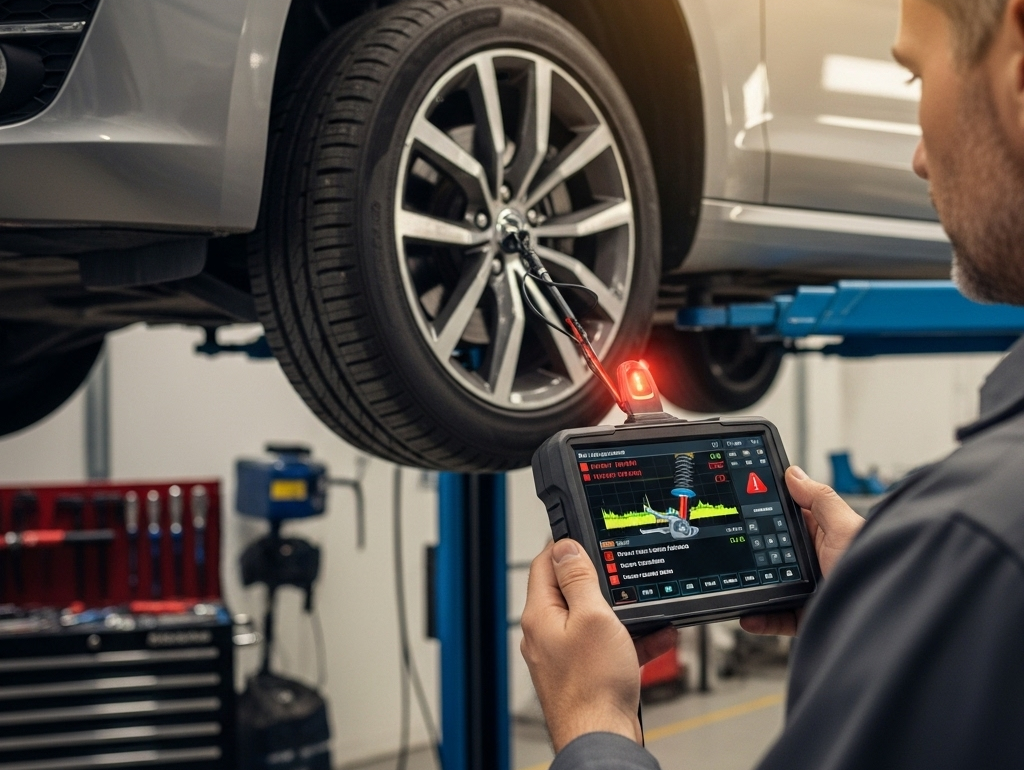
Examining Tire Pressure Monitoring Systems pressure monitoring devices in electric vehicles electric rides often needs more than purely visual inspection. Modern OBD2 monitors offer remarkable ability to display TPMS data and detect potential problems. Utilizing these systems, technicians can read fault codes, evaluate sensor quality, and even implement sensor inspections, allowing for accurate diagnosis of pressure detection problems and minimizing outage periods. Such is especially important given the increasing complexity of EV devices.
Managing Tire Pressure Monitoring Systems Waves: A Practical Briefing for European Region, Eastern Asia, and the Continent
Effectively running wheel pressure devices among the Continent, Asian Subcontinent, and American Continent necessitates a thorough command of the diverse signal bands they work with. Contrary to a standardized system, various locations frequently adheres specific frequency limits. Namely tpms frequency europe asia us Europe predominantly depends on 315 MHz range and 433.92 MHz band, while the Continent typically uses 315 MHz range even though some late models can adopt four hundred thirty-three point nine two MHz. Asian Subcontinent displays a more intricate landscape, with many bandwidths operated, depending on the state and transport maker.
- Check local legislations regarding tire sensor signal.
- Look up your vehicle directory for exact signal.
- Deploy a sensor analyzer able to processing several wavelengths.
